
The smart-home stack is becoming a building-operations layer
Southeast Asia — Philippines and Thailand
Share ↗
The signal
Two Southeast Asian deployments suggest consumer smart-home platforms are being repackaged as operational control layers spanning rooms, shared building systems and multi-site commercial portfolios.
Why this one
Two recent deployments expose an accessible but non-obvious shift from consumer connectivity toward property operations. The signal has clear relevance to facilities, retail, hospitality and technology procurement while retaining testable uncertainty.
The clue
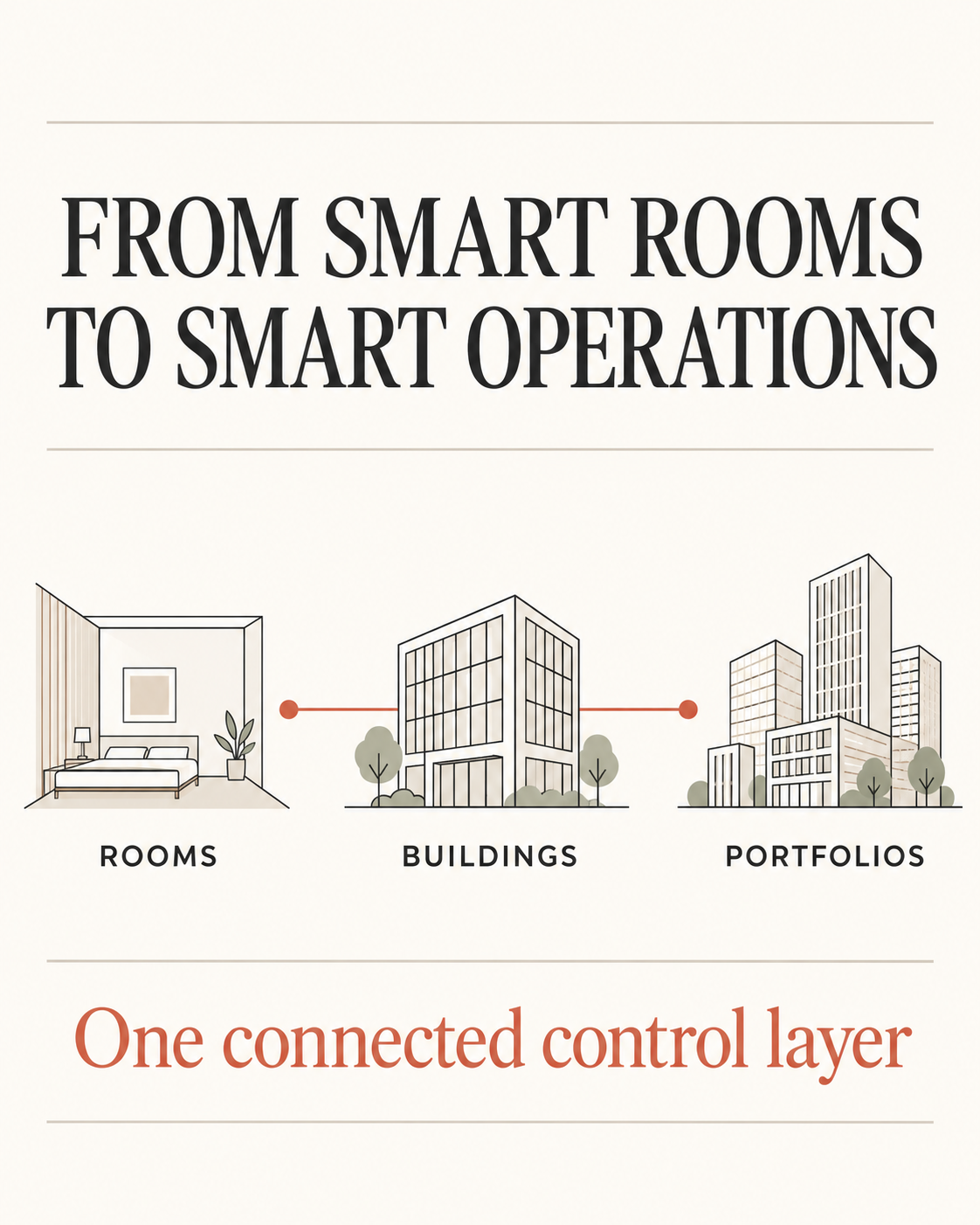
Two Southeast Asian deployments indicate that technology developed for connected homes is being extended into commercial facilities and multi-site operations.
In Cebu, Samsung’s SmartThings Pro and building-management technology are specified for a mixed-use development spanning residences, a hotel, commercial facilities and shared infrastructure. In Thailand, SmartThings Pro and commercial HVAC are already operating across three home-improvement stores.
Why it matters
Property, hospitality and retail companies may begin selecting connected-device platforms during building design and portfolio procurement—not after construction as an appliance or tenant amenity decision.
That could create opportunities for integrators, energy-management services and cross-vendor control software. It also raises questions about interoperability, data custody and dependence on one supplier.
Evidence and interpretation
- Observed facts: Samsung and developer DH Plus agreed to integrate connected appliances, SmartThings Pro and building controls into Cebu’s Granz Forest Park. A separate Thai deployment links SmartThings Pro with commercial HVAC at three Thai Watsadu stores. - Interpretation: Consumer-device ecosystems are being repackaged as operational platforms connecting rooms, shared building systems and geographically distributed properties. Conventional building-management systems and open integration platforms remain credible alternatives. - Speculation: If customers expand these deployments after measuring operating performance, familiar smart-home platforms could become serious competitors in selected parts of the commercial building-technology market.
What to watch next
Paid rollouts beyond the three Thai pilot branches, independently measured operating savings, third-party device integration and additional mixed-use developments would strengthen the thesis; a failure to expand beyond vendor-bundled showcases would weaken it.