
Robots need building permissions, not just better navigation
Europe — Ireland and Switzerland, with South Korean technology deployed in Japan
Share ↗
The signal
The Irish credential-at-the-door approach and the Korean platform deployed in Japan address the same boundary through different architectures. That supports a broader integration problem, not a prediction that either supplier wins. Manual escort or dedicated routes remain simpler alternatives where deployment is small.
Why this one
Two different deployments expose a concrete procurement issue that business leaders can test, without assuming broad robot adoption.
The clue
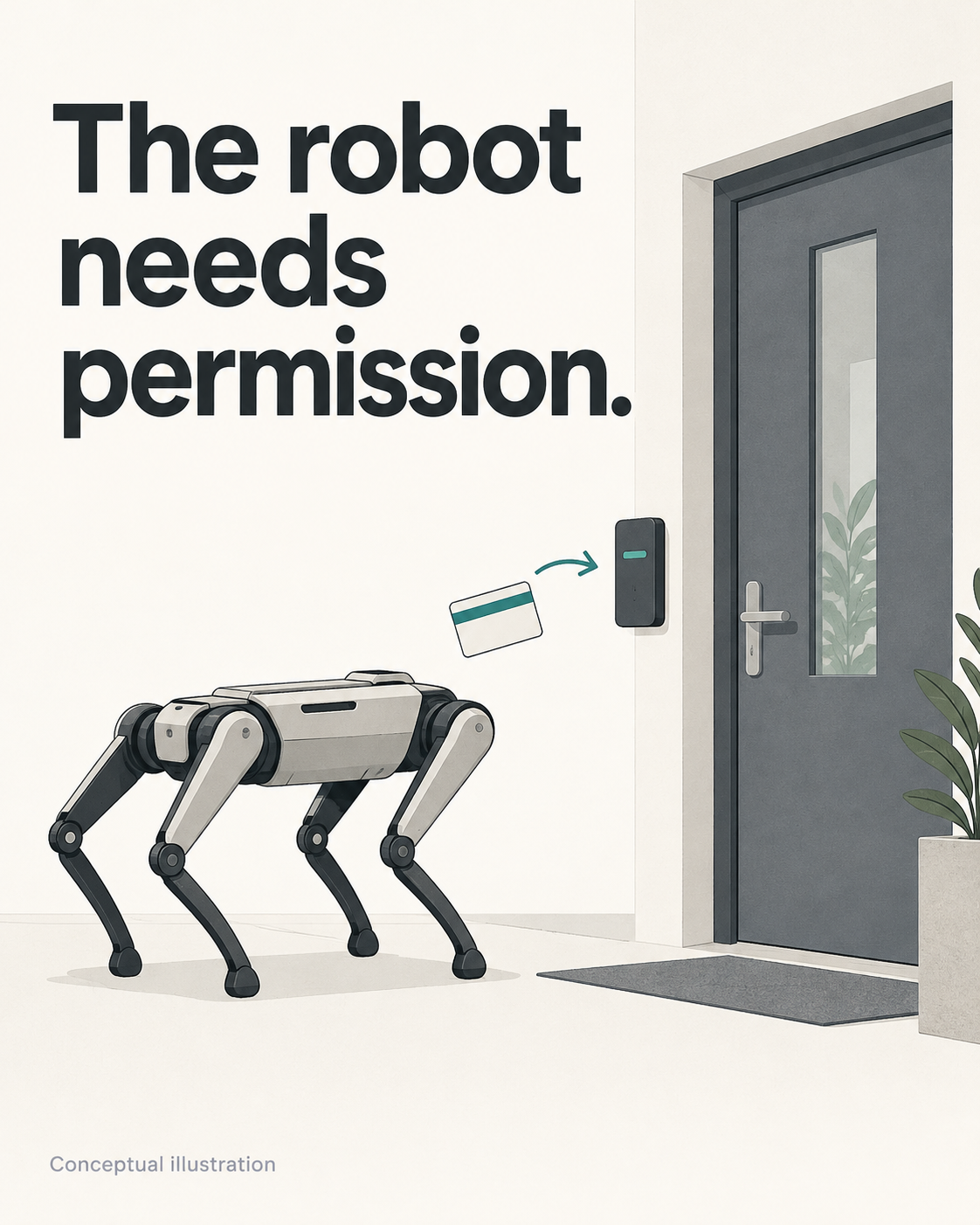
A working door-access pilot and a separate building-platform deployment suggest that existing buildings are becoming a practical constraint on robot autonomy.
Why it matters
Robot purchases may create an unbudgeted integration job shared by facilities, security and IT—not simply a navigation-software requirement.
Evidence and interpretation
- Observed facts: On September 17, dormakaba reported a joint pilot with ANYbotics and LEGIC at Whitegate power plant in Ireland: a robot used digital credentials for controlled doors; commercial availability remained a next step. Separately, NAVER’s July 23 account describes ARC connecting delivery robots to existing elevators and doors at Tokyo Midtown Yaesu. These are supplier-reported deployments, not independent audits. - Interpretation: The Irish credential-at-the-door approach and the Korean platform deployed in Japan address the same boundary through different architectures. That supports a broader integration problem, not a prediction that either supplier wins. Manual escort or dedicated routes remain simpler alternatives where deployment is small. - Speculation: Reusable building connectors and robot-permission management could become a specialist supplier niche; open, cross-vendor interoperability is not yet established.
What to watch next
Look for paid repeat installations, measured human interventions, permission-revocation tests and safe recovery from network failures. Persistent bespoke engineering or security failures would weaken the thesis.