
Weather-triggered cover moves into everyday workflows
Southeast Asia — Indonesia and Singapore; Japanese business-buyer analogue
Share ↗
The signal
Igloo and DANA's September wallet launch, Pasona's separate July-start weather-index procurement and GAIP's August research suggest distribution, credible triggers and renewal operations are emerging commercial constraints around established parametric insurance. Product availability and a buyer contract do not establish payout performance, adequate loss coverage or sustainable economics.
The clue
A consumer-wallet launch in Indonesia and a separate Japanese business purchase suggest weather-index insurance is becoming easier to distribute and procure.
Why it matters
The potential supplier opportunity lies in dependable weather data, policy integration and explaining payout decisions—not merely automating payments.
Evidence and interpretation
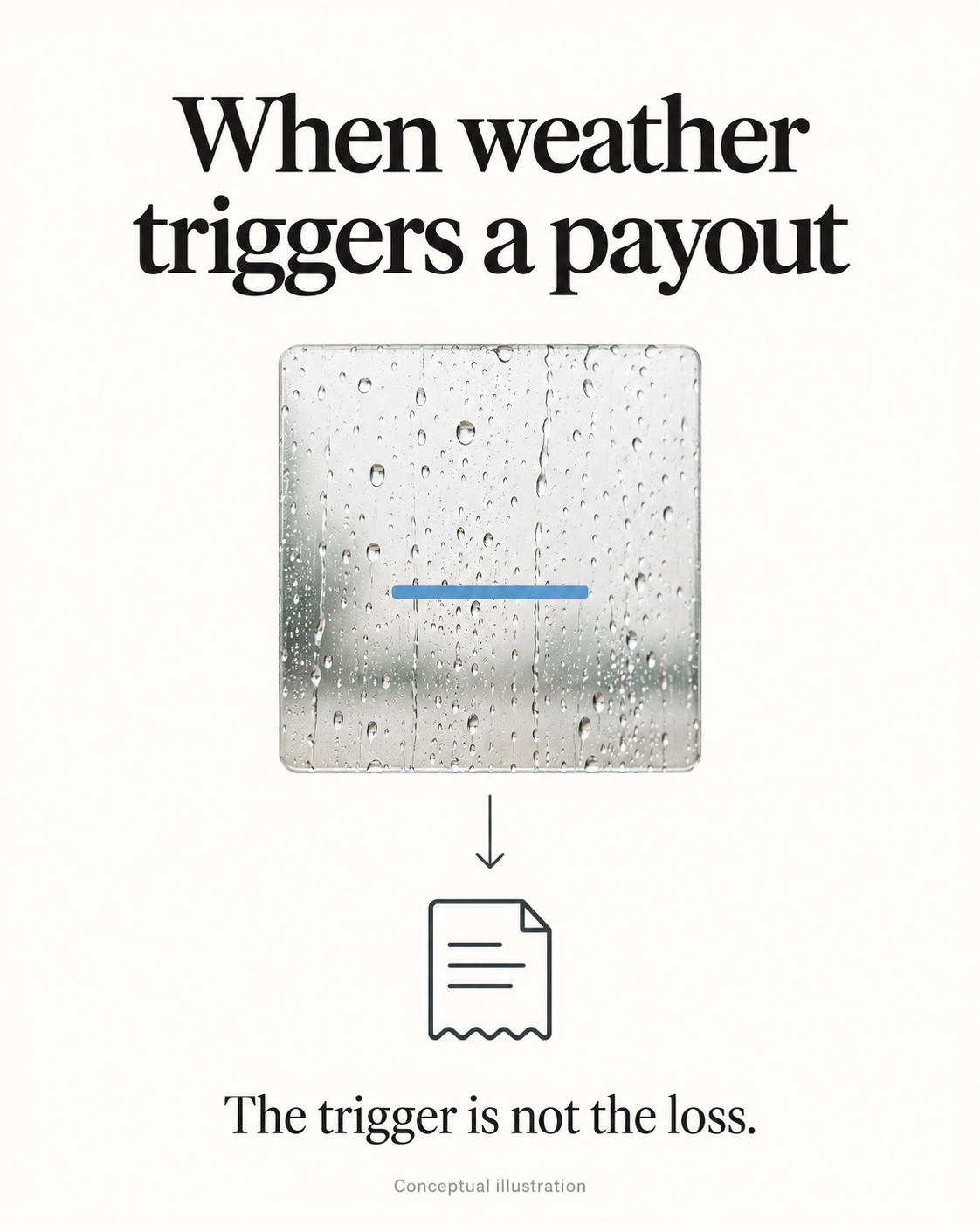
- Observed facts: Igloo’s September 29 launch describes DANA rain cover using satellite rainfall and GPS to trigger compensation without manual loss assessment. Pasona separately disclosed a July 1-start contract tied to rainy-day counts for its Awaji Island operations. GAIP’s August research identifies trusted distribution, credible triggers and renewal as adoption constraints. Sources below. - Interpretation: These consumer and corporate examples use predefined weather conditions instead of individual loss assessment. Conventional insurance and retained cash reserves remain alternatives. The key question is whether the trigger tracks the disruption buyers actually face. - Speculation: Platforms could create recurring demand for trigger-validation and customer-support services. Neither announcement demonstrates sustainable economics or satisfactory payout experience.
What to watch next
Published payout and non-payout experience, customer renewals and repeat platform integrations would strengthen the thesis. Poor correlation between triggers and actual disruption, disputes or weak renewal would weaken it; conventional loss-adjusted cover and retained reserves remain alternatives.