
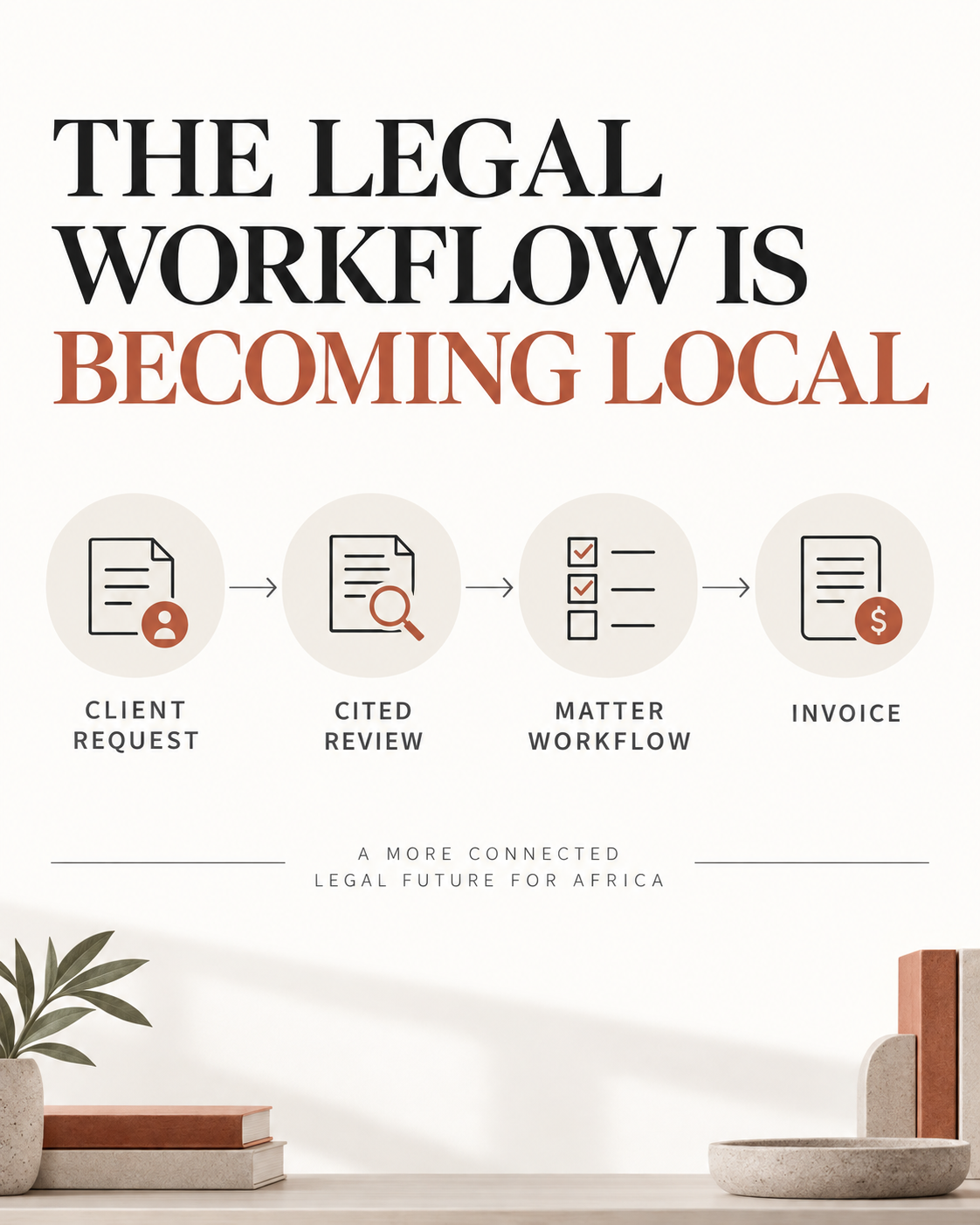
Kenyan legal software is becoming a local operating layer
Sub-Saharan Africa — Kenya, with expansion paths across African jurisdictions
Share ↗
The signal
The simultaneous appearance of live Kenyan platforms spanning cited legal research, matter operations, local court and tax integrations, and billing suggests localization is moving from content into the operating system of legal practice.
The clue
Several Kenyan suppliers now offer live, locally configured legal-work platforms—not merely general-purpose chat assistants. Their products span cited research, matter management, court and tax integrations, client intake and billing.
Why it matters
Localization may become a structural advantage in professional software. Enterprise buyers could increasingly favor platforms that encode local filing systems, payment methods, accounting rules and data-sovereignty requirements instead of adapting a global product after deployment.
Evidence and interpretation
- Observed facts: Kesi offers an intake-to-invoice platform with contract review, cited document analysis, case management and Kenyan-shilling pricing. Wakili describes integrations for Kenya’s eKejiji court filing and eTIMS tax invoicing, alongside trust accounting and Kenya Law research. Sheria LLM offers cited Kenyan-law research, local pricing and an on-premises deployment option. - Interpretation: Three independently operated products addressing different parts of the same localized workflow indicate supplier formation around a Kenyan legal-operations stack. - Speculation: If paid deployments follow, locally encoded operating workflows—not the underlying language model—could become the defensible layer in African legal technology.
What to watch next
Named paid deployments, renewal rates, reliable court and tax integrations, and independently measured changes in review time, collections or billable work would strengthen the thesis; stalled integrations or low repeat use would weaken it.